AI Weekly Roundup: Key Innovations and Investments (January 19-27, 2026)
The period of January 19-27, 2026, marked another week of dynamic and rapid evolution within the artificial intelligence landscape. The relentless pace of innovation has continued unabated, showcasing a significant drive towards more sophisticated, capable, and impactful AI technologies across various fronts.
Introduction: A Snapshot of AI's Rapid Evolution
The period of January 19-27, 2026, marked another week of dynamic and rapid evolution within the artificial intelligence landscape. The relentless pace of innovation has continued unabated, showcasing a significant drive towards more sophisticated, capable, and impactful AI technologies across various fronts.
This past week, in particular, saw major tech players leading the charge, with significant announcements and research emerging from industry giants like Google and Meta. These updates collectively underscored their ongoing commitment to pushing the boundaries of what AI can achieve, from foundational model advancements to practical, real-world implementations.
In this weekly roundup, we'll delve into the latest breakthroughs in advanced AI capabilities, explore innovative industry-specific applications that are actively transforming diverse sectors, and highlight the strategic investments and partnerships that are shaping the future trajectory of the field. Prepare to gain actionable insights into the key developments propelling AI forward at an unprecedented and exciting pace.
Google's Agentic Vision with Gemini 3 Flash and Conversational Search
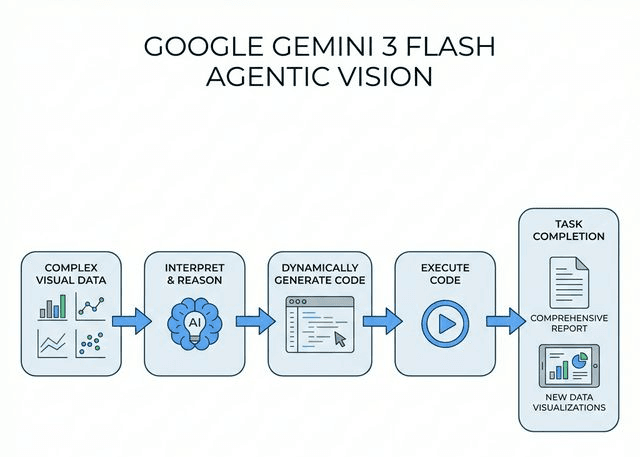
Google continues to push the boundaries of AI, unveiling significant advancements in its Gemini ecosystem that promise more autonomous and intuitive interactions. A standout innovation is the introduction of 'Agentic Vision' for the forthcoming Gemini 3 Flash Source. This groundbreaking capability signifies a major leap towards more self-sufficient AI agents by enabling them to not only comprehend complex visual data but also to actively engage with it.
Agentic Vision empowers Gemini 3 Flash to write and execute code dynamically to perform tasks based on its visual understanding Source. Imagine an AI analyzing a series of intricate charts, identifying underlying trends, and then autonomously generating a comprehensive report or even creating new data visualizations based on its findings Source. This ability to interpret, reason, and act by generating and running code directly addresses challenges in visual data processing, moving beyond passive analysis to active problem-solving.
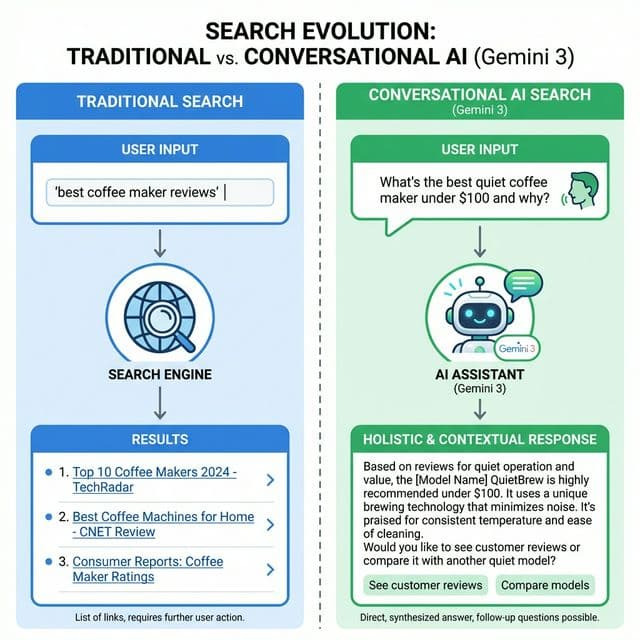
Further enhancing user interaction, Google Search is undergoing a substantial transformation, upgrading to a full conversational AI mode, powered by Gemini 3 Source. This integration aims to provide a more natural, intuitive, and comprehensive search experience. Users can now engage with Search in a dynamic, interactive dialogue, asking follow-up questions and refining queries in natural language to receive holistic and contextual responses, moving beyond traditional keyword matching Source. These developments underscore Google's commitment to creating a more intelligent and proactive AI-driven future.
AI for Retail: Google's NRF 2026 Announcements and Drone Delivery Expansion
This past week, Google unveiled a suite of innovative AI-powered solutions aimed at revolutionizing the retail sector, with key announcements made at NRF 2026: Retail's Big Show Source. These advancements underscore AI's growing role in enhancing every facet of the shopping journey, from discovery to delivery, promising a more intelligent and integrated retail experience for both businesses and consumers.
A cornerstone of Google's retail strategy is the introduction of the Universal Commerce Protocol (UCP). This groundbreaking protocol is designed to facilitate "agentic commerce," enabling a more seamless and integrated shopping experience. Through the UCP, users will soon be able to complete transactions directly within AI Mode in Search and the Gemini app. Imagine conversing with an AI assistant about a product and then being able to purchase it instantly, without leaving the conversation interface. This innovation promises to streamline the checkout process, making shopping more intuitive and conversational by leveraging Google's advanced AI capabilities Source.

Beyond the digital storefront, AI is also making significant strides in physical logistics. A notable development is the substantial expansion of the drone delivery partnership between Google's Wing and Walmart. This collaboration is set to bring faster, more efficient last-mile delivery services to a broader customer base, specifically expanding into the Dallas-Fort Worth (DFW) area Source. The deployment of AI-powered drones for package delivery showcases a practical and impactful application of artificial intelligence in optimizing supply chains. These autonomous systems navigate complex environments, manage flight paths, and ensure safe, timely delivery, highlighting how AI is not just transforming how we shop, but also how goods reach our doorsteps. This expansion represents a tangible step towards a future where rapid, automated delivery becomes commonplace, driven by advanced AI and robotics.
Meta's Massive AI Investment Strategy for 2026
Meta is signaling an unprecedented commitment to artificial intelligence, with reports indicating a significant increase in its capital spending for AI initiatives. For 2026, the tech giant is projected to allocate a staggering $115-135 billion towards AI-related capital expenditures Source. This substantial investment underscores Meta's ambition to solidify its position as a frontrunner in the evolving AI landscape, competing vigorously with other industry titans.
The sheer scale of this capital injection will have profound implications for Meta's AI ambitions and its underlying infrastructure. It suggests an accelerated push into cutting-edge AI research, aiming to develop more powerful foundational models and innovative AI-powered features across its vast ecosystem of platforms. A significant portion of this investment is expected to bolster Meta's hardware development capabilities, including the acquisition of advanced GPUs and the potential for greater in-house custom AI chip design.
Furthermore, this capital will be crucial for expanding and upgrading Meta's global network of data centers. These facilities are the backbone of AI development, requiring immense computing power, storage, and cooling infrastructure to train and deploy complex AI models. By heavily investing in these areas, Meta is preparing to scale its AI capabilities dramatically, supporting everything from advanced generative AI applications to more sophisticated recommendation systems and immersive metaverse experiences.
The Broader Impact and Future Outlook of AI Innovation
The past week, spanning January 19-27, 2026, has underscored several dominant themes shaping the future of artificial intelligence. We've seen a clear acceleration in the development of agentic AI, moving beyond simple task automation to more autonomous, goal-oriented systems. Alongside this, there's a strong push towards highly specialized, industry-specific AI applications, demonstrating a shift from general-purpose models to tailored solutions that address unique sector challenges. Furthermore, significant corporate investments continue to fuel this innovation, highlighting a robust confidence in AI's transformative potential across the global economy.
These developments carry immediate and profound implications for both businesses and consumers. For enterprises, the integration of advanced AI promises unprecedented efficiencies, new avenues for product innovation, and a redefinition of competitive landscapes. Consumers can anticipate more personalized experiences, smarter tools, and potentially disruptive new services that enhance daily life. In the long term, these trends suggest a future where AI is not just a tool, but an integral, intelligent partner in problem-solving and value creation, fundamentally altering workforce dynamics and societal structures.
As the pace of AI innovation continues to accelerate, staying informed and adaptable is paramount. Businesses must proactively explore AI integration strategies, while individuals are encouraged to cultivate new skills and perspectives to thrive in an AI-augmented world. The trajectory of AI development is dynamic, offering immense opportunities for those prepared to embrace and shape its evolution.